 Image 1 of 4
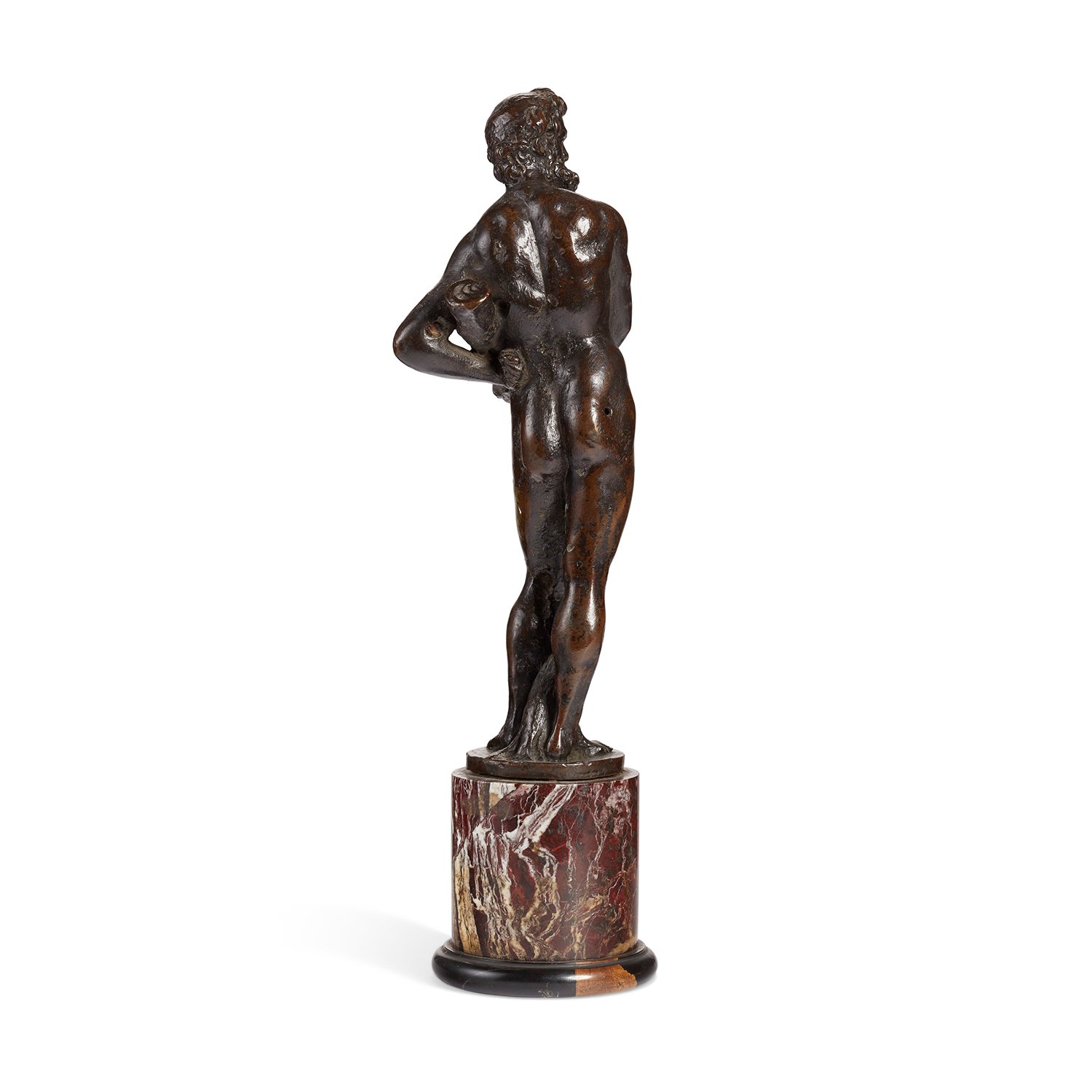 Image 2 of 4
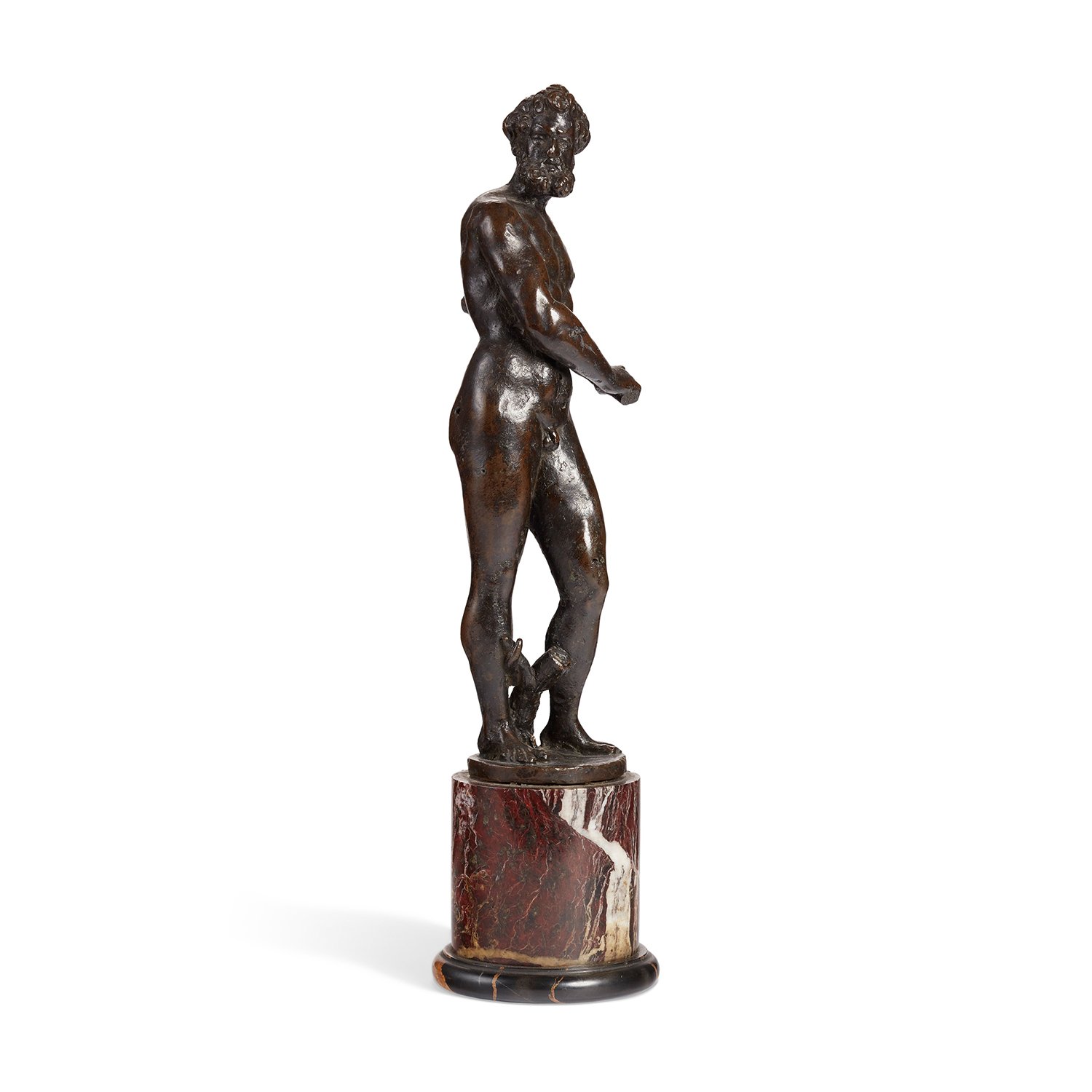 Image 3 of 4
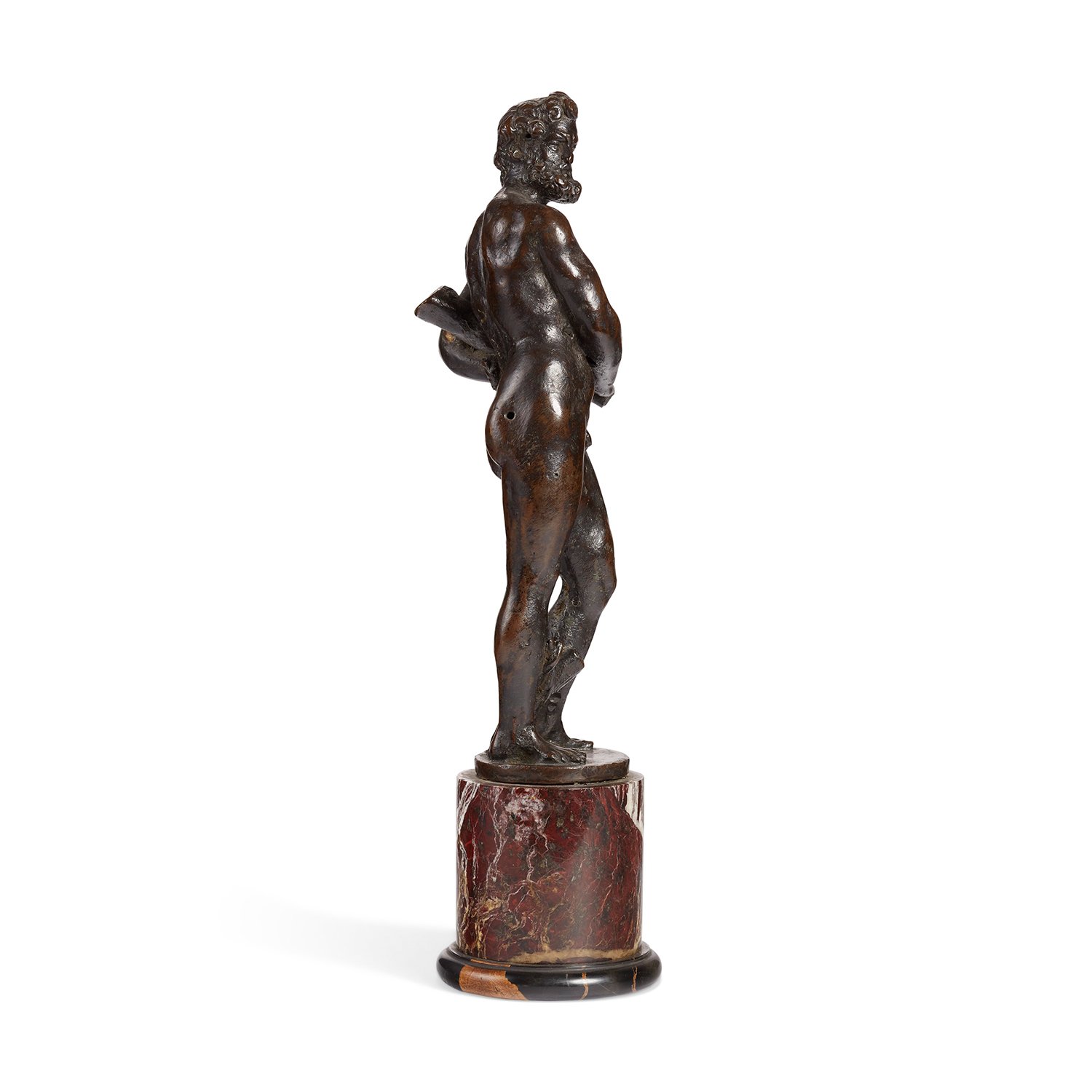 Image 4 of 4
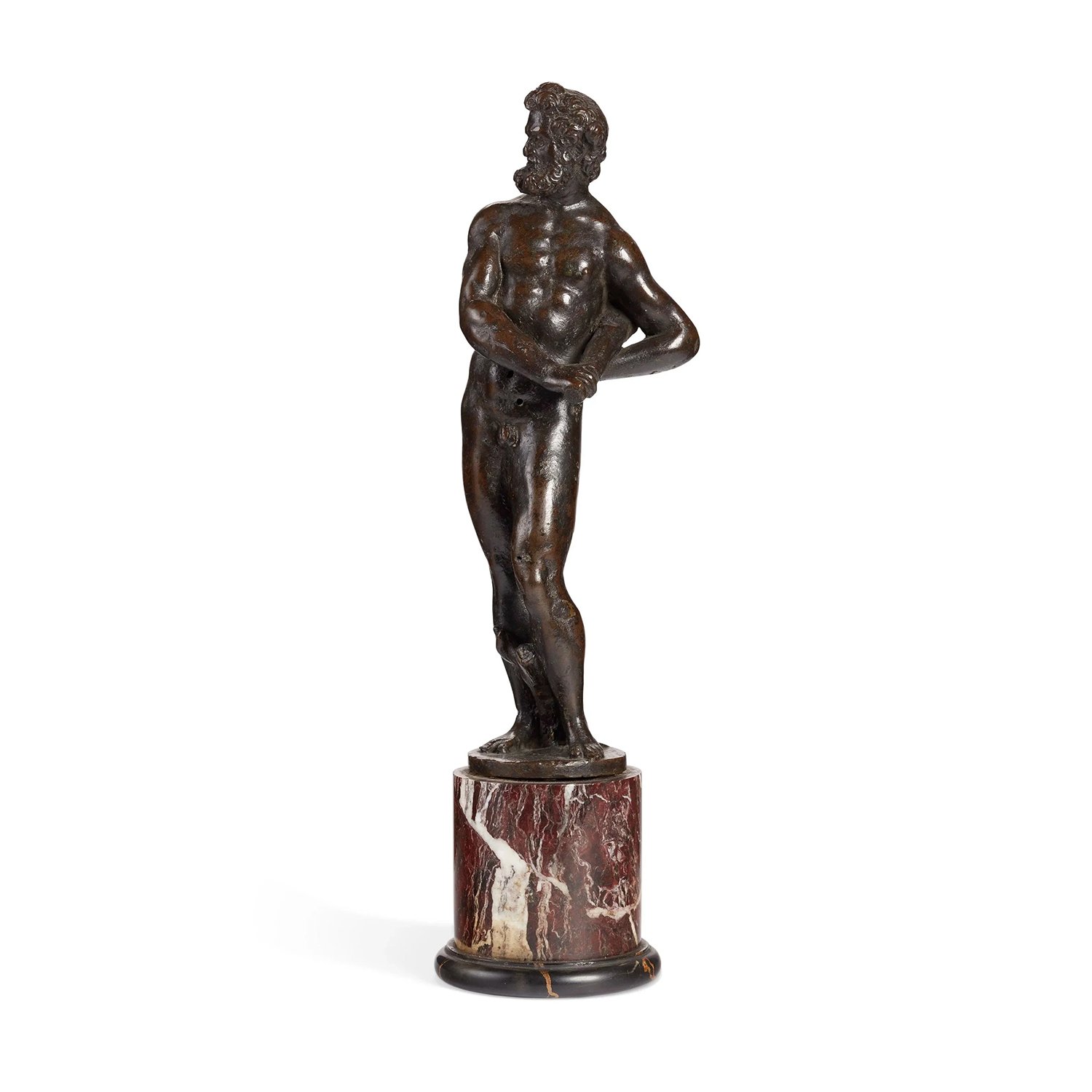
Nicolo Roccatagliata (c.1593 - c.1636)
A Venetian Bronze Statue of Hercules
17th century, Circa 1600
ORIGINAL OWNER WAS CHAIRMAN OF THE ART INSTITUTE OF CHICAGO!!
1963 AIC MUSEUM LABEL WITH COLLECTION NUMBER IS STILL ATTACHED!!
This diminutive bronze was given pride of place astride massive red porphyry columns in the Chicago penthouse of famed philanthropic collectors, James & Marilyn Alsdorf, underscoring Hercules' commanding presence, even when surrounded by life-sized statuary (cf. Christie's Alsdorf Collection video of 8/18/2020 @ 0:08s - 0:10s).
Beginning his metalwork apprenticeship in Genoa at the prodigious age of 10, Nicolo Roccatagliata was a pupil of A. Groppo, later working for Tintoretto. Roccatagliata's darkly patinated bronzes of classical & religious subjects adorn the world's finest museums.
Original to the artist's 17th century studio (in contrast to a proliferation of later Grand Tour copies), the present model's late Renaissance date is evinced by the variegated patination, unforced natural modeling, and archaic casting methods (which continued under his son, Sebastiano).
Marked by superior rendering of the abdominal musculature & posterior flesh, a 16th century Renaissance contrapposto in Hercules' stance is counterbalanced by an evident trend towards early 17th century mannerism in the stylized treatment of the hair, beard, and eyes.
While the Vienna version (provenanced by 1924) is argued by some to be the finest from Roccatagliata's workshop, Yale University's (London, 1958) has finer details. Yet, these details betray the Yale model's origins as a sophisticated product of an 18th/19th century copyist, who worked from an entirely new wax model, recast by later methods, and intricately tooled & reimagined the surface into an almost plastic patina. Still, the Vienna statue's brief provenance calls into question which casting should be deemed definitive.
Analysis of Roccatagliata patinas is revelatory: the variegated, oily patchwork of golden hues blooming from a milky chocolate wash (as found on this piece) are indicative of the period early 17th century Venetian foundries.
The possibility exists (absent TL dating) that many of these statues declared as period, in fact have no place in the 17th century. A 2008 Bonham's, London auction presented an inferior, apparently late 19th century casting (attributed to the 17th century), sporting a bizarre patina & coarse tracemarks of an overused molding (fatigue-induced slag, etc.), probably consequent to siring countless tourist reproductions. Its lofty Heinemann origins also failed to deliver, offering no provenance prior to WWII.
In stark contrast, an obviously genuine & original 17th century casting was offered by Sotheby's, London 5/2020 (approx. $12,000), achieving roughly double the typical sale price for these popular Roccatagliata Hercules models, despite ALL competing models also having been advertised as period 17th century.
In short, the market appears to recognize established stylistic & metallurgical cues for these Roccatagliata bronze Hercules castings.
Proposed as a Roccatagliata model to crown andirons (cast bronze hearth accoutrements form a substantial portion of his studio's surviving oeuvres), the statue's current form makes it an ideal addition to a scholar's desk, library bookshelf, or small statuary collection.
The Rosso Levanto base was mostly likely quarried in Leguria, due west from Venice (the bronze's place of birth). Rosso Levanto is a stunning white-veined purple-red marble the ancient Romans prized for columns & decorative elements, providing a perfect balance to a subject from antiquity.
Today's Italian Rosso Levanto quarries are all but defunct, and a Turkish variety is substituted. Perhaps not coincidentally, the only readily retrievable Roccatagliata Hercules record in private or public hands with a (partial) Rosso Levanto base also possesses an earlier provenance than other versions seen at major auctions over the past circa 20 years: from the collection of German nobleman William Freiherr von Hammerstein-Equord (1785-1861), reinforcing that the present base is either original to the piece (bypassing andirons) or was added by the 18th century.
Height: ~10.5”
NOTA BENE: The prior Christie's, New York auction of the present statue failed to record an Art Institute of Chicago label and collection number on the base of this statue!!
The Alsdorfs loaned & donated heavily to the Art Institute of Chicago (AIC), eventually endowing an entire collection of Asian art. James Alsdorf was, further, a *** FOUNDER OF THE MUSEUM OF CONTEMPORARY ART, CHICAGO!! ***
Rather an important ART AUTHORITY, no?
Gee, I wonder how this statue owner's background as *****THE CHAIRMAN OF THE AIC FROM 1975-1978****** might connect to the 1963 AIC LABEL UNDERNEATH ?!?!
The accompanying AIC label provides strong (if not certain) evidence that this statue was once a part of the permanent collections at the museum, or was loaned to the museum by the Alsdorfs at some point in the past.
Provenance:
The Art Institute of Chicago, 1963.
The Alsdorf Collection, Chicago.
Christie's, Old Masters, 2021: Property from the James & Marilynn Alsdorf Collection.
Property of a Taiwan Forbes List Family.
Property of a Philanthropist of the Arts & Sciences.
Nicolo Roccatagliata (c.1593 - c.1636)
A Venetian Bronze Statue of Hercules
17th century, Circa 1600
ORIGINAL OWNER WAS CHAIRMAN OF THE ART INSTITUTE OF CHICAGO!!
1963 AIC MUSEUM LABEL WITH COLLECTION NUMBER IS STILL ATTACHED!!
This diminutive bronze was given pride of place astride massive red porphyry columns in the Chicago penthouse of famed philanthropic collectors, James & Marilyn Alsdorf, underscoring Hercules' commanding presence, even when surrounded by life-sized statuary (cf. Christie's Alsdorf Collection video of 8/18/2020 @ 0:08s - 0:10s).
Beginning his metalwork apprenticeship in Genoa at the prodigious age of 10, Nicolo Roccatagliata was a pupil of A. Groppo, later working for Tintoretto. Roccatagliata's darkly patinated bronzes of classical & religious subjects adorn the world's finest museums.
Original to the artist's 17th century studio (in contrast to a proliferation of later Grand Tour copies), the present model's late Renaissance date is evinced by the variegated patination, unforced natural modeling, and archaic casting methods (which continued under his son, Sebastiano).
Marked by superior rendering of the abdominal musculature & posterior flesh, a 16th century Renaissance contrapposto in Hercules' stance is counterbalanced by an evident trend towards early 17th century mannerism in the stylized treatment of the hair, beard, and eyes.
While the Vienna version (provenanced by 1924) is argued by some to be the finest from Roccatagliata's workshop, Yale University's (London, 1958) has finer details. Yet, these details betray the Yale model's origins as a sophisticated product of an 18th/19th century copyist, who worked from an entirely new wax model, recast by later methods, and intricately tooled & reimagined the surface into an almost plastic patina. Still, the Vienna statue's brief provenance calls into question which casting should be deemed definitive.
Analysis of Roccatagliata patinas is revelatory: the variegated, oily patchwork of golden hues blooming from a milky chocolate wash (as found on this piece) are indicative of the period early 17th century Venetian foundries.
The possibility exists (absent TL dating) that many of these statues declared as period, in fact have no place in the 17th century. A 2008 Bonham's, London auction presented an inferior, apparently late 19th century casting (attributed to the 17th century), sporting a bizarre patina & coarse tracemarks of an overused molding (fatigue-induced slag, etc.), probably consequent to siring countless tourist reproductions. Its lofty Heinemann origins also failed to deliver, offering no provenance prior to WWII.
In stark contrast, an obviously genuine & original 17th century casting was offered by Sotheby's, London 5/2020 (approx. $12,000), achieving roughly double the typical sale price for these popular Roccatagliata Hercules models, despite ALL competing models also having been advertised as period 17th century.
In short, the market appears to recognize established stylistic & metallurgical cues for these Roccatagliata bronze Hercules castings.
Proposed as a Roccatagliata model to crown andirons (cast bronze hearth accoutrements form a substantial portion of his studio's surviving oeuvres), the statue's current form makes it an ideal addition to a scholar's desk, library bookshelf, or small statuary collection.
The Rosso Levanto base was mostly likely quarried in Leguria, due west from Venice (the bronze's place of birth). Rosso Levanto is a stunning white-veined purple-red marble the ancient Romans prized for columns & decorative elements, providing a perfect balance to a subject from antiquity.
Today's Italian Rosso Levanto quarries are all but defunct, and a Turkish variety is substituted. Perhaps not coincidentally, the only readily retrievable Roccatagliata Hercules record in private or public hands with a (partial) Rosso Levanto base also possesses an earlier provenance than other versions seen at major auctions over the past circa 20 years: from the collection of German nobleman William Freiherr von Hammerstein-Equord (1785-1861), reinforcing that the present base is either original to the piece (bypassing andirons) or was added by the 18th century.
Height: ~10.5”
NOTA BENE: The prior Christie's, New York auction of the present statue failed to record an Art Institute of Chicago label and collection number on the base of this statue!!
The Alsdorfs loaned & donated heavily to the Art Institute of Chicago (AIC), eventually endowing an entire collection of Asian art. James Alsdorf was, further, a *** FOUNDER OF THE MUSEUM OF CONTEMPORARY ART, CHICAGO!! ***
Rather an important ART AUTHORITY, no?
Gee, I wonder how this statue owner's background as *****THE CHAIRMAN OF THE AIC FROM 1975-1978****** might connect to the 1963 AIC LABEL UNDERNEATH ?!?!
The accompanying AIC label provides strong (if not certain) evidence that this statue was once a part of the permanent collections at the museum, or was loaned to the museum by the Alsdorfs at some point in the past.
Provenance:
The Art Institute of Chicago, 1963.
The Alsdorf Collection, Chicago.
Christie's, Old Masters, 2021: Property from the James & Marilynn Alsdorf Collection.
Property of a Taiwan Forbes List Family.
Property of a Philanthropist of the Arts & Sciences.