 Image 1 of 3
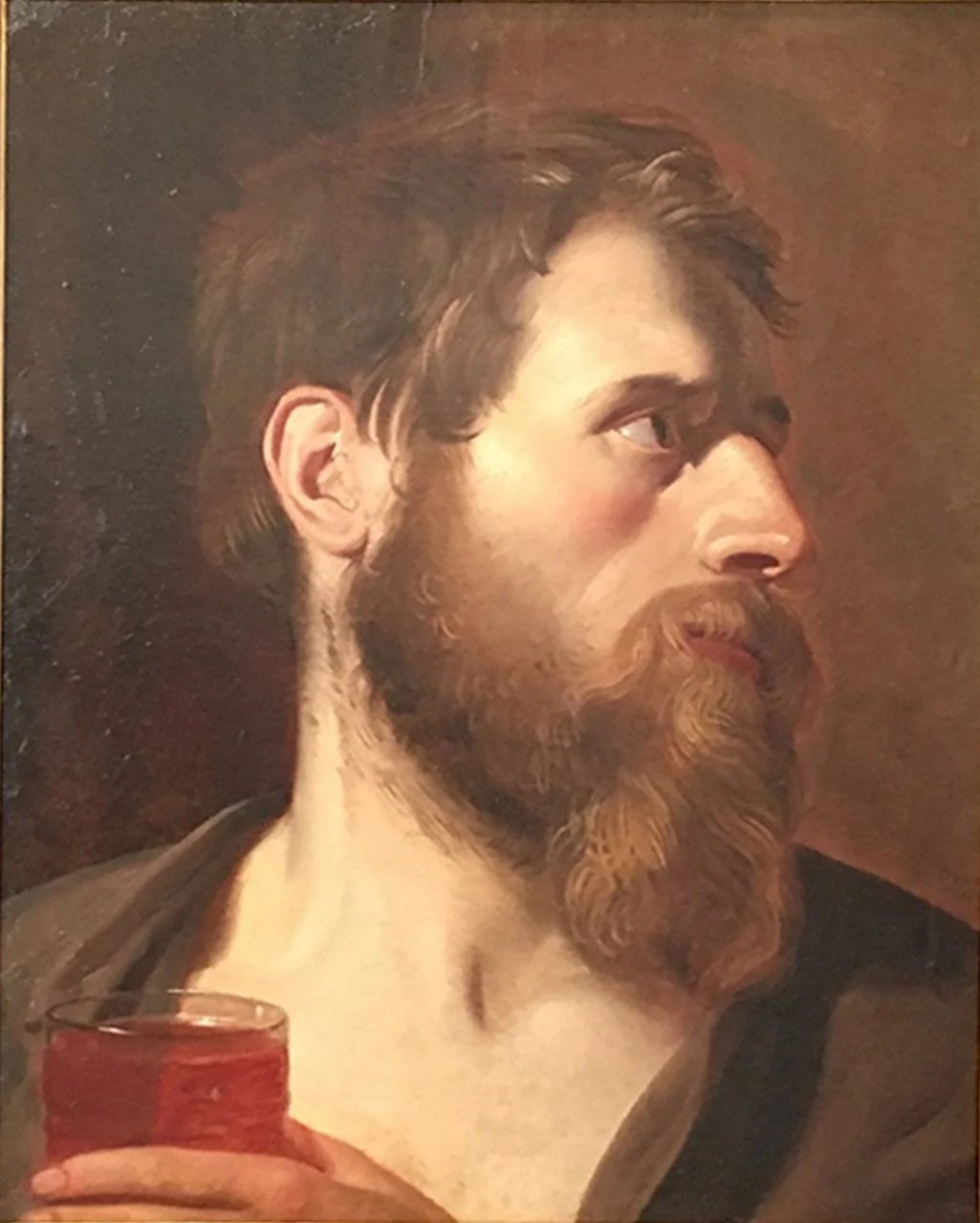 Image 2 of 3
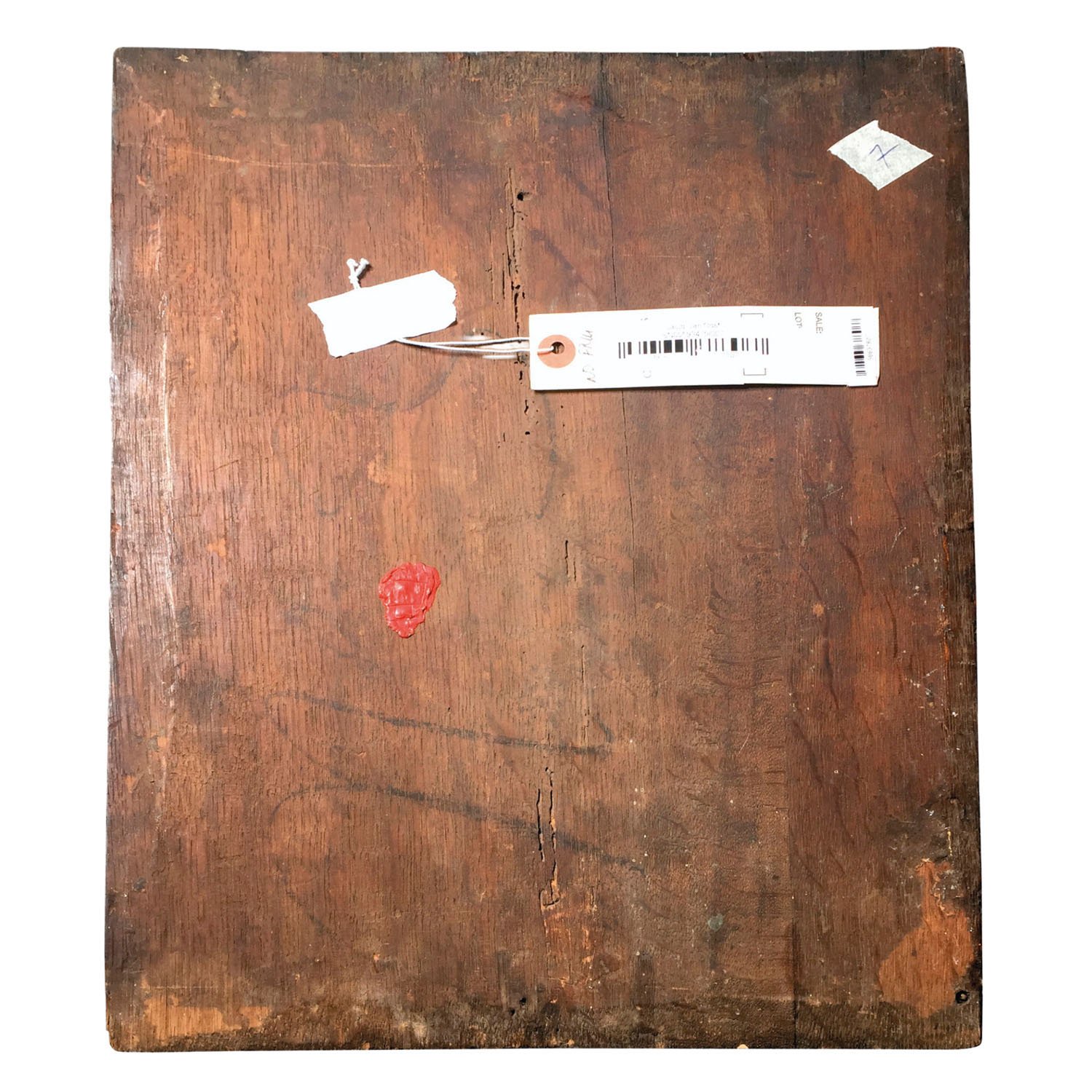 Image 3 of 3
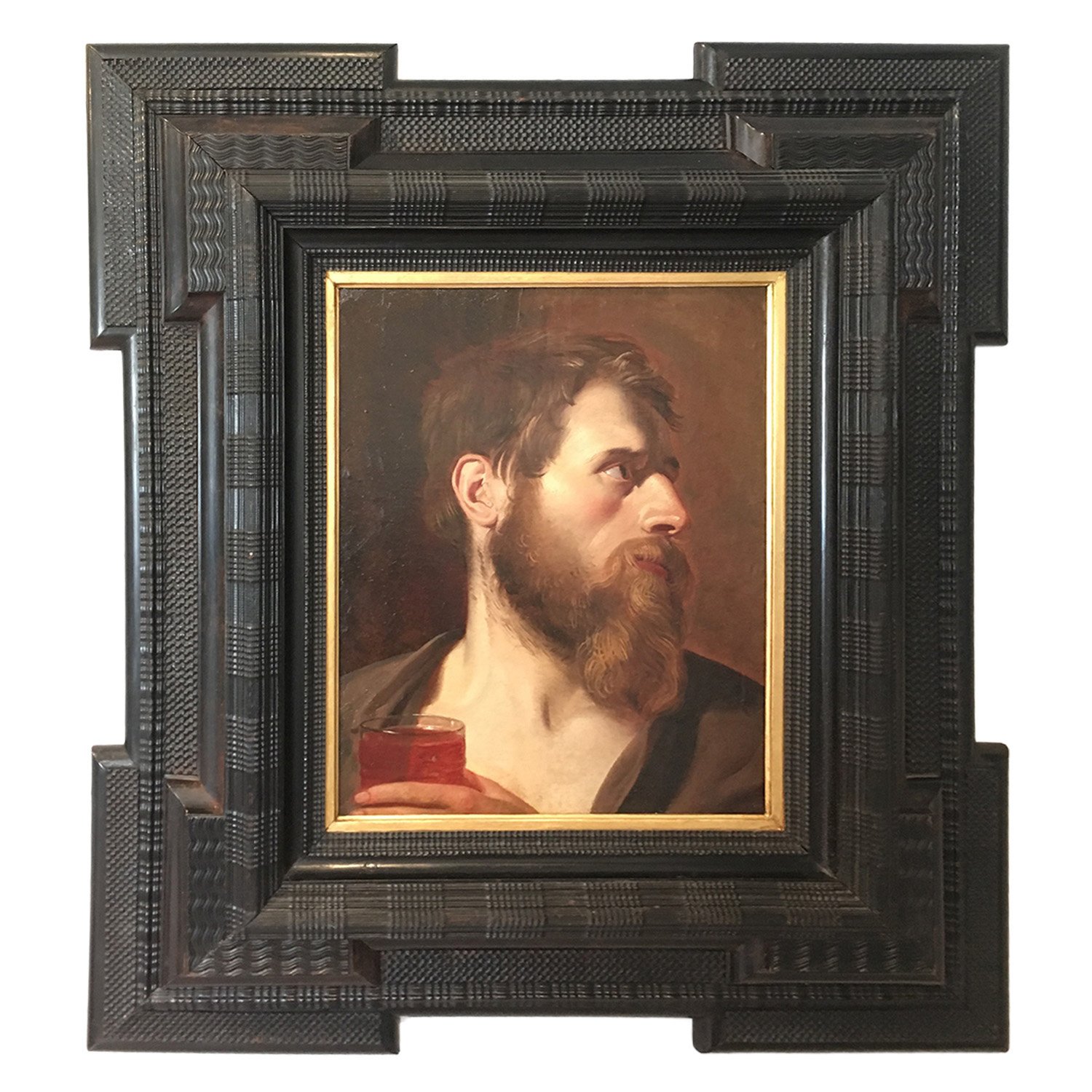
JACOB VAN OOST (1603-1671) TRONIE STUDY FOR THE HERMITAGE ADORATION OF THE SHEPHERDS (1630)
* Purchased at Christie’s, NYC *
JACOB VAN OOST (1603-1671)
TRONIE STUDY FOR A NATIVITY SHEPHERD, CIRCA 1628
IN THE ADORATION OF THE SHEPHERDS (1630)
THE HERMITAGE MUSEUM, SAINT PETERSBURG
In this day and age of instantaneous encyclopedic biographical information on nearly every famous artist, particularly with an online gallery, I try to minimize repetitious facts, and focus on the inimitable character of the artwork for sale to best serve your pleasure.
Like Da Vinci, Michelangelo, and Caravaggio (to name but a few), the name of Van Oost requires no introduction to students of art history (and even most casual observers), as he was the greatest artist in Bruges during that period of renowned 1600s Dutch painting & intellectual enlightenment (before the wider European Enlightenment), from whence blossomed one of the world’s greatest artists ever known: Rembrandt.
The same photo-realistic mastery seen in other great Dutch painters of this period is evident in the often glossy & polished paintings of Jacob van Oost (the elder), albeit complexified by intrusions of Mannerism inherited from the primary influence from his Italian years (1621-1628): Caravaggio.
The present masterwork, while only a head study (“tronie,” in the Dutch vernacular), exhibits all the greatest talents of Van Oost in the treatment of light upon the hair (brown strands penetrated by illumination transformed to a fleeting blonde radiance), fine delineation of the same with effortless single strokes, heavy Italianate chiaroscuro to the flesh along anatomically accurate bone structure shadowlines, strong emphasis on eye expression & ocular physiology, and an overall humanized presentation inherited from his main Italian mentor, abovementioned.
Indeed, once attributed to Jacob Jordaens in Paris, it was a Christie’s, New York specialist (since promoted to London) who discovered the match between this tronie and the shepherd holding the lamb in Van Oost’s monumental Hermitage Adoration. Another Dutch scholar later commented (after our purchase from Christie’s) on the symbolism of John the Baptist always holding the lamb (“Lamb of God”), suggesting this tronie, thus, to be a study for John the Baptist.
However, given Jesus & John the Baptist are considered to be roughly the same age (perhaps, six months apart), unless Van Oost committed doctrinal error (even Michelangelo did so with accidental devil’s horns on his otherwise immaculate Moses, owing to a mistranslation of the Hebrew word for light flowing from his temples) or meant to presage Jesus as “the Lamb of God” by fast-forwading St. John’s age, it would seem the handsome bearded figure in question (both in the Hermitage Adoration and in this GORGEOUS head study) would only be a certain poor shepherd keeping his sheep… :-)
Regardless of identity, the parity between the two figures (as found in this tronie and in the completed manger scene) is clear, with the main difference being the superior execution and beauty of this circa 1628 head study when compared to the corresponding face in the Hermitage Adoration.
Indeed, for such a large canvas, it is likely the outer figures would have received treatment by Van Oost’s assistants, while the central figures such as Mary, the Baby Jesus, and the closer standing shepherd can be seen as heavily worked by the hand of Van Oost, himself.
To wit, it is in the brushwork of the beard & hair of that standing shepherd (in a blue smock, carrying a red hat) that we see the exact same execution of the same features on the present tronie for sale. A copyist would render after the same face - he or she would not masterfully employ the details of the superior adjacent shepherd to improve upon the actual head being copied.
Rather, the rational logic is that an assistant executed an inferior copy of this tronie by Van Oost’s hand for the much larger 1630 Adoration, while Van Oost worked on the more central shepherd, which therefore, matches his own hand in this magnificent tronie.
As far as the hand and wine cup, it is well known that artists seeking marketable fare would doll-up their tronies for resale. Alternatively, the inherently whimsical nature of tronies often called for genre flourishes such as the glass of wine, and thus, this tronie may have preceded the Adoration by years, only to have later been used as a model for the shepherd. An interesting face, with possibly Italian physiognomy, the model might have been a dear friend or companion of Van Oost’s painted in Italy, shortly before his return to Bruges, after which point the Adoration work commenced rather promptly.
Normally, my determinations are definitive, and priced accordingly. As family health issues prevented my further study of this Van Oost abroad, I will defer to the final determination Christie’s made as “Attributed to Jacob Van Oost,” even though I believe this to be an autograph work, as only an artist superior to Van Oost, himself, could have created such a masterpiece, and nothing about the paint or substrate (paper glued to wood, as the case would often be with a tronie) suggests anything but a correspondent and correct early 1600s composition by Van Oost.
On these grounds, you have the good fortune of a $25,000 price (for the time being) instead of the $50,000+ I would most likely charge following further work in Europe.
Should the painting remain unsold (only now being listed here in January of 2026) by such time as I am able to travel (probably in summer), an upwards price revision would likely follow said trip.
This much I promise: the beauty and awe-inspring quality of this painting will NOT disappoint you - nor will the perfectly wedded antique Dutch black frame with gold filet (itself an artifact worth thousands), which transports this piece to a new level of sacred inspiration.
Dimensions (unframed): ~16” × ~12.5”
Provenance: Christie’s, New York, 2020.
* Purchased at Christie’s, NYC *
JACOB VAN OOST (1603-1671)
TRONIE STUDY FOR A NATIVITY SHEPHERD, CIRCA 1628
IN THE ADORATION OF THE SHEPHERDS (1630)
THE HERMITAGE MUSEUM, SAINT PETERSBURG
In this day and age of instantaneous encyclopedic biographical information on nearly every famous artist, particularly with an online gallery, I try to minimize repetitious facts, and focus on the inimitable character of the artwork for sale to best serve your pleasure.
Like Da Vinci, Michelangelo, and Caravaggio (to name but a few), the name of Van Oost requires no introduction to students of art history (and even most casual observers), as he was the greatest artist in Bruges during that period of renowned 1600s Dutch painting & intellectual enlightenment (before the wider European Enlightenment), from whence blossomed one of the world’s greatest artists ever known: Rembrandt.
The same photo-realistic mastery seen in other great Dutch painters of this period is evident in the often glossy & polished paintings of Jacob van Oost (the elder), albeit complexified by intrusions of Mannerism inherited from the primary influence from his Italian years (1621-1628): Caravaggio.
The present masterwork, while only a head study (“tronie,” in the Dutch vernacular), exhibits all the greatest talents of Van Oost in the treatment of light upon the hair (brown strands penetrated by illumination transformed to a fleeting blonde radiance), fine delineation of the same with effortless single strokes, heavy Italianate chiaroscuro to the flesh along anatomically accurate bone structure shadowlines, strong emphasis on eye expression & ocular physiology, and an overall humanized presentation inherited from his main Italian mentor, abovementioned.
Indeed, once attributed to Jacob Jordaens in Paris, it was a Christie’s, New York specialist (since promoted to London) who discovered the match between this tronie and the shepherd holding the lamb in Van Oost’s monumental Hermitage Adoration. Another Dutch scholar later commented (after our purchase from Christie’s) on the symbolism of John the Baptist always holding the lamb (“Lamb of God”), suggesting this tronie, thus, to be a study for John the Baptist.
However, given Jesus & John the Baptist are considered to be roughly the same age (perhaps, six months apart), unless Van Oost committed doctrinal error (even Michelangelo did so with accidental devil’s horns on his otherwise immaculate Moses, owing to a mistranslation of the Hebrew word for light flowing from his temples) or meant to presage Jesus as “the Lamb of God” by fast-forwading St. John’s age, it would seem the handsome bearded figure in question (both in the Hermitage Adoration and in this GORGEOUS head study) would only be a certain poor shepherd keeping his sheep… :-)
Regardless of identity, the parity between the two figures (as found in this tronie and in the completed manger scene) is clear, with the main difference being the superior execution and beauty of this circa 1628 head study when compared to the corresponding face in the Hermitage Adoration.
Indeed, for such a large canvas, it is likely the outer figures would have received treatment by Van Oost’s assistants, while the central figures such as Mary, the Baby Jesus, and the closer standing shepherd can be seen as heavily worked by the hand of Van Oost, himself.
To wit, it is in the brushwork of the beard & hair of that standing shepherd (in a blue smock, carrying a red hat) that we see the exact same execution of the same features on the present tronie for sale. A copyist would render after the same face - he or she would not masterfully employ the details of the superior adjacent shepherd to improve upon the actual head being copied.
Rather, the rational logic is that an assistant executed an inferior copy of this tronie by Van Oost’s hand for the much larger 1630 Adoration, while Van Oost worked on the more central shepherd, which therefore, matches his own hand in this magnificent tronie.
As far as the hand and wine cup, it is well known that artists seeking marketable fare would doll-up their tronies for resale. Alternatively, the inherently whimsical nature of tronies often called for genre flourishes such as the glass of wine, and thus, this tronie may have preceded the Adoration by years, only to have later been used as a model for the shepherd. An interesting face, with possibly Italian physiognomy, the model might have been a dear friend or companion of Van Oost’s painted in Italy, shortly before his return to Bruges, after which point the Adoration work commenced rather promptly.
Normally, my determinations are definitive, and priced accordingly. As family health issues prevented my further study of this Van Oost abroad, I will defer to the final determination Christie’s made as “Attributed to Jacob Van Oost,” even though I believe this to be an autograph work, as only an artist superior to Van Oost, himself, could have created such a masterpiece, and nothing about the paint or substrate (paper glued to wood, as the case would often be with a tronie) suggests anything but a correspondent and correct early 1600s composition by Van Oost.
On these grounds, you have the good fortune of a $25,000 price (for the time being) instead of the $50,000+ I would most likely charge following further work in Europe.
Should the painting remain unsold (only now being listed here in January of 2026) by such time as I am able to travel (probably in summer), an upwards price revision would likely follow said trip.
This much I promise: the beauty and awe-inspring quality of this painting will NOT disappoint you - nor will the perfectly wedded antique Dutch black frame with gold filet (itself an artifact worth thousands), which transports this piece to a new level of sacred inspiration.
Dimensions (unframed): ~16” × ~12.5”
Provenance: Christie’s, New York, 2020.